
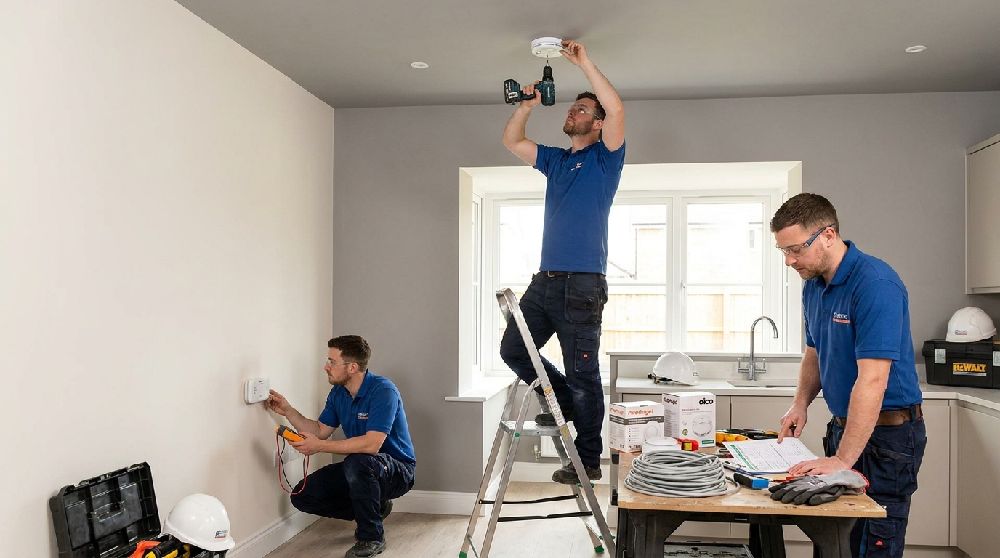
Choosing the right smoke alarms, heat alarms and CO detectors involves more than just meeting compliance rules. UK fire safety standards keep changing, and installers are under growing pressure when it comes to system design, alarm positioning, interlinking and ongoing maintenance. Expectations are now much higher. Property developers, landlords, facilities managers and electricians all need clear advice they can use on site while staying up to date with current regulations.
A dependable alarm system can save lives, cut down on false alarms and help buildings remain compliant with the latest standards. Government figures show that 92% of households in England had a working smoke alarm in the year ending March 2024. Even so, many fire-related deaths still happen in homes where proper protection is missing (UK Government).
This smoke alarm guide explains the basics of BS 5839, along with advice on selecting the right alarm types and where they should be fitted. It also looks at how modern interlinked systems are changing domestic fire protection. Anyone working on rental housing, commercial refurbishments, HMOs or home improvement projects needs to understand the differences between smoke alarms, heat alarms and CO detectors to specify safer, more reliable systems. During busy projects, many installers also depend on suppliers such as Electricalwholesaler for fast access to compliant fire and security products.
Understanding the Different Alarm Types
Different alarms handle different risks. One of the most common mistakes in home fire protection is putting the wrong detector in the wrong part of the house.
Optical smoke alarms are commonly installed in hallways, landings, bedrooms and living rooms. They work particularly well with slow, smouldering fires linked to furniture or faulty electrical cables. Many homeowners pick them for busy areas because normal cooking fumes are less likely to set them off by mistake. A sensible option.
Heat alarms are better suited to kitchens, garages and utility rooms. Rather than detecting smoke, they respond to quick increases in temperature. This helps cut down on unnecessary alerts caused by steam, cooking smoke or heat coming from appliances.
CO detectors serve a different role. They monitor carbon monoxide produced by boilers, open fires and other fuel-burning appliances around the home. Dangerous stuff. Because carbon monoxide cannot be seen or smelled, these detectors play an important role in household safety.
The figures behind these products help explain why picking the right alarm matters. According to government-backed data, people are around 11 times more likely to die in a house fire if there is no working smoke alarm (Fire Safety Awareness Training).
You are around eight times more likely to die from a fire if you don’t have a working smoke alarm in your home.
| Common domestic alarm applications | ||
| Alarm Type | Best Location | Main Purpose |
| Optical Smoke Alarm | Hallways and bedrooms | Detects smoke from slow-burning fires |
| Heat Alarm | Kitchens and garages | Reduces nuisance alarms from cooking |
| CO Detector | Near boilers and fuel appliances | Detects carbon monoxide leaks |
Many modern systems now use interlinked alarms across the property. When one alarm is triggered, every connected unit sounds at the same time. In larger homes, HMOs and rental properties, that arrangement can make a real difference because someone may not hear a single detector going off in another part of the building.
BS 5839 Basics for Domestic and Commercial Work
BS 5839 sets the main UK standards for fire detection and alarm systems. Most installers know the name, but the differences between the various parts are not always clear when moving between domestic and commercial jobs.
BS 5839-1 applies to non-domestic premises such as offices, shops, schools, warehouses and other commercial buildings. BS 5839-6 applies to domestic properties, including houses and flats. The requirements change depending on the setting.
BS 5839-6 divides domestic systems into several categories.
- LD1 provides the highest level of life protection, with detection in escape routes and every room except bathrooms and toilets.
- LD2 covers escape routes along with higher-risk areas such as kitchens and utility rooms.
- LD3 protects escape routes only.
Alarm grades also matter. Grade D1 systems use mains-powered alarms with tamper-proof battery backup, and they are commonly installed in rental properties and newer domestic setups. Grade F systems use battery-only alarms and are generally fitted in lower-risk environments. These are simpler systems with lower protection levels.
The 2025 update to BS 5839-1 introduced stronger guidance on detector selection, documentation and reducing false alarms (Fire Detection Shop). Multisensor alarms now get more attention because they combine different sensing methods, helping improve reliability across different environments.
| Category | Coverage Level | Typical Use |
|---|---|---|
| LD1 | Whole dwelling except bathrooms | High-risk homes and larger properties |
| LD2 | Escape routes plus high-risk rooms | Most modern domestic installations |
| LD3 | Escape routes only | Basic life protection |
Installers also need a clear understanding of local regulation differences. Scotland now requires interlinked alarms in many domestic properties, while England has expanded landlord responsibilities for smoke alarms and CO detectors. The rules are still changing.
Documentation is becoming more important too. Designers and installers are now more frequently expected to explain why certain detector types were chosen for specific areas and how those choices match the risks involved.
Placement, Testing and Maintenance Mistakes
Correct positioning matters just as much as picking the right product. Bad placement can delay detection or trigger constant false alarms, which soon becomes frustrating.
Most installers place smoke alarms on ceilings and keep at least 30cm between the unit and nearby walls, vents or light fittings. CO detectors are commonly installed one to three metres from the combustion appliance at around head height.
Installers also regularly deal with issues linked to poor maintenance instead of faulty products. Research from the Fire Industry Association and YouGov found that around 4 million UK adults never test their smoke alarms, and only 22% complete monthly checks (Fire Industry Association).
| Maintenance Issue | Common Result | Prevention |
|---|---|---|
| Blocked smoke alarm | Reduced sensitivity | Regular cleaning |
| Expired backup battery | Alarm failure during power cuts | Use sealed 10-year batteries |
| Wrong detector type | False alarms | Match alarm to room type |
False alarms still create major problems in homes and commercial buildings. Standard smoke alarms installed too close to kitchens can go off again and again, leading some occupants to remove the batteries or switch the units off completely. Heat alarms generally work far better in cooking areas and help cut down unnecessary activations.
Older detectors can also create ongoing problems.
All smoke alarms (including hard-wired or those with removable batteries) should be replaced after 10 years, or by the replace by date on the base or earlier if they are found to be defective.
Sealed lithium battery alarms are becoming more common because they help stop battery tampering and reduce maintenance visits. For landlords and facilities teams, they can also make long-term compliance easier to manage.
CO Detectors and Rental Property Compliance
Carbon monoxide protection now plays a much bigger part in UK regulations. In England, landlords must install at least one smoke alarm on every storey used as living accommodation, along with a CO alarm in any room that contains a fixed combustion appliance (UK Government).
Despite tighter rules, reports still indicate that 42% of UK homes do not have a carbon monoxide alarm fitted (elec.training).
Installers have a clear responsibility here, and the growing demand also brings more work across the trade. Boiler replacements, consumer unit upgrades, and full property refurbishments all give electricians a good opportunity to check CO coverage and spot missing protection before issues develop.
Facilities managers face a different challenge during routine inspections. Detector lifespan dates need close attention because older buildings can contain several alarm types with different replacement schedules, making them more difficult to track and maintain.
Many landlords now prefer interlinked systems for rental properties because they improve warning times for occupants. In larger buildings, a detector activated in a basement utility room can quickly alert people sleeping upstairs.
Smarter alarm systems are expected to keep growing through 2026, especially wireless interlinked products that help installers cut installation time and reduce disruption in occupied buildings.
Choosing Products for Real-World Installations
A fire detection setup should fit the building layout, the people living there and the level of maintenance the owner can realistically manage. A small owner-occupied flat may only need a basic LD3 arrangement. Larger homes generally need wider coverage. An HMO or bigger family property may require LD2 or even LD1 protection, especially where escape routes and higher-risk rooms need extra attention.
Multisensor alarms are now far more common because they combine smoke and heat detection in one unit. Updated BS 5839-1 guidance says these alarms can reduce false alarms while still providing reliable detection performance (IPS Fire and Security). They can work well in busy homes.
When installers choose products, they may look at:
- Power source and expected battery life
- Interlinking features
- Testing and maintenance requirements
- Compliance with BS 5839 categories
- Whether the alarm suits kitchens, bedrooms or escape routes
- Access for future replacements
During retrofit projects, wireless interlinked alarms can cut labour time because installers do not need to lift flooring or open walls. This creates much less disruption. Hard-wired systems are still widely used in new-build homes and larger refurbishment projects where wiring access is already part of the plan.
Many property developers now choose sealed 10-year battery alarms. They can reduce tenant maintenance issues over time and support dependable long-term performance.
Frequently Asked Questions
What is the difference between a smoke alarm and a heat alarm?
Smoke alarms detect smoke particles from fires, while heat alarms react to rapid temperature increases. Smoke alarms are best for hallways, bedrooms, and living areas, while heat alarms are more suitable for kitchens and garages.
Are interlinked smoke alarms required in the UK?
Requirements vary depending on location and property type. Interlinked alarms are increasingly expected under BS 5839-6, especially in HMOs, larger dwellings, and Scottish domestic properties.
How often should smoke alarms be tested?
Most manufacturers and fire safety bodies recommend testing alarms monthly. Regular testing helps confirm the sounder, power source, and interlinking functions are still operating correctly.
Where should a carbon monoxide detector be installed?
CO detectors should normally be installed one to three metres from a combustion appliance and positioned at head height. Avoid placing them directly beside windows, vents, or extractor fans.
How long do smoke alarms last?
Most smoke alarms should be replaced after 10 years unless the manufacturer states otherwise. Many installers now prefer sealed 10-year battery alarms to reduce maintenance and battery removal issues.
Where can installers find compliant smoke alarms and CO detectors quickly?
Trade buyers often use suppliers such as Electricalwholesaler for access to fire and security products, wiring accessories, and installation essentials during domestic and commercial projects.
Putting Safer Fire Detection Into Practice
Choosing smoke alarms, heat alarms and CO detectors involves more than simply meeting minimum regulations. A well-planned setup improves safety, cuts down nuisance alarms and helps buildings stay compliant as rules and requirements change over time. Getting the setup right can make a big difference.
Installers with a good understanding of BS 5839 categories can create more reliable systems for homes, HMOs, rental properties and commercial spaces. Detector choice also needs to match the risks in each room because different environments bring different challenges. Optical smoke alarms work well in living areas and escape routes. Heat alarms are generally a better option for kitchens and garages because they are less likely to respond to cooking fumes. CO detectors also remain important, especially near fuel-burning appliances.
Fire detection technology now includes more interlinked and multisensor systems. Wider warning coverage gives occupants more time to react during an emergency, while improved sensor accuracy helps reduce false alarms. Repeated false alerts can frustrate residents and create extra work for maintenance teams looking after the system.
Regular testing, correct positioning and replacing alarms at the right time still matter. Even high-quality systems can fail if batteries are removed, detectors are installed badly, or alarms remain in use beyond their recommended service life.
Electricians, maintenance teams and property managers all need to stay current with BS 5839 updates and changing rental regulations. Keeping informed helps avoid expensive compliance problems and supports safer buildings for the people using them every day.
Article created with SEOZilla