
When managing a home or rental property, it is easy to overlook the electrical panel tucked away under the stairs or in the utility room. However, if you haven't updated your consumer unit (fuse box) recently, your household electronics could be operating entirely unprotected against high-voltage spikes.
Under the modern BS 7671 (18th Edition Amendment) wiring regulations, installing a Surge Protection Device (SPD) has transitioned from an optional tech-home luxury to a foundational safety standard. Let's break down exactly what an SPD does, why it is mandatory for modern compliance, and how to select the right equipment to safeguard your property.
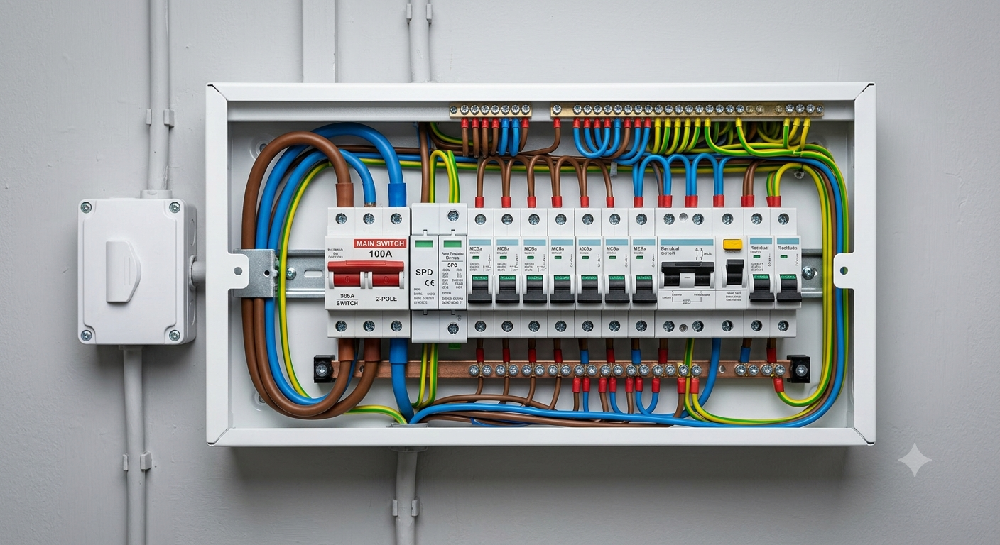
What is a Surge Protection Device (SPD)?
An SPD acts as an instantaneous safety valve for your home’s electrical system. It constantly monitors incoming voltage. The moment it detects a dangerous spike, it safely channels that excess energy away from your internal circuits and harmlessly into the earth.
There are two primary sources of electrical surges:
External Spikes: Massive, sudden surges caused by lightning strikes hitting nearby infrastructure or utility grid switching. These can instantly ruin every plugged-in appliance.
Internal Spikes: Small, micro-surges caused by everyday appliances cycling on and off—such as refrigerator compressors, vacuum cleaners, or power tools. Over time, these micro-surges slowly degrade the sensitive circuit boards inside your smart TVs, computers, and heating controls.
The 18th Edition Rule: Is an SPD Mandatory?
Yes, in almost all practical scenarios. The latest UK wiring standards state that surge protection must be installed in all new or modified installations unless a complex risk assessment formally proves it isn't required.
Because modern UK homes are packed with high-value electronics, smart devices, and increasingly EV charging infrastructure, the economic loss of a surge is considered too high to ignore. If you are a landlord or are planning an electrical renovation, updating your board is the fastest path to legal compliance.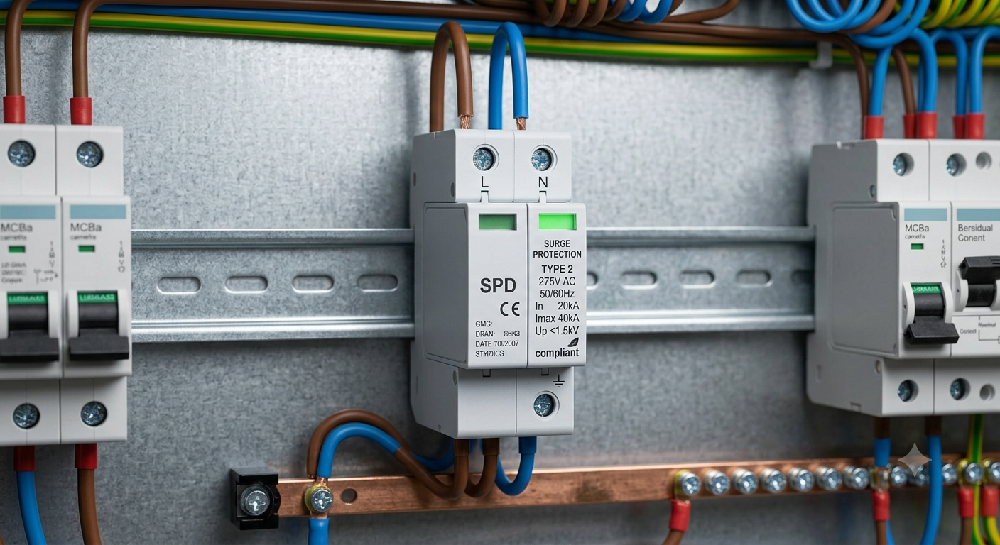
Choosing the Right Hardware for Your Upgrade
If you are retrofitting or building out your system, you have two primary options:
1. Retrofitting an Existing Board
If your current consumer unit is relatively modern and structurally sound, you can often have your electrician install a standalone module directly into your existing panel array. For single-phase household systems, a highly compatible option like the Wylex Single Module Type 2 SPD provides straightforward, compact protection without consuming excessive rail space.
2. Upgrading to a Complete Modern Board
For older properties with outdated fuse boxes, a complete board replacement is usually the safest and most cost-effective path. Upgrading to an all-in-one enclosure—such as the pre-configured FuseBox 15-Way Metal Consumer Unit with T2 SPD—ensures your home immediately meets modern safety regulations. These metal, non-combustible enclosures arrive ready to house individual circuit protection.
To achieve maximum circuit isolation, professional installers pair these surge boards with individual FuseBox RCBOs. Unlike older shared RCD systems, an RCBO ensures that if a single appliance develops a fault, only that specific circuit trips, leaving the rest of your home completely functional and illuminated.
Summary Table: Legacy vs. Modern Circuit Protection
How to Proceed Safely
Consumer unit upgrades and testing require deep technical knowledge. Always consult a qualified, registered electrician to evaluate your earthing configuration and complete the installation. They will verify your protection settings and issue an Electrical Installation Certificate (EIC) to prove your property meets current UK safety standards.